

Greetings!
I mention several books this time, and there are a few very short videos at the end. Enjoy!
But enough of this persiflage! On with the newsletter.
Terry

My courses running in June and July at the City Lit can now be applied for using a 15% discount code. In fact, you can use the discount code on all courses to the value of between £99 and £500 running in June, July and August.
More information here:
My next course, on 13th June, is Writing Using Constraints. More information here.
Be daring — leave the safety net at home!
From the blurb:
What if the secret to unleashing your imagination was working against it? Discover the radical ideas of the French Oulipo movement, where creative constraints become a springboard for surprising, inventive writing. Experiment with challenging limitations - and find out what you’re really capable of.
That course runs tomorrow! It should be a lot of fun — a bit like going to the dentist. Er, that’s not quite the analogy I want! I mean, it’s going to be full of challenges, but by the end of the day the people who go on it will have a veritable toolkit of useful techniques, especially to alleviate writer’s block. And if you don’t believe me, consider the massive amount of verbiage literature I manage to create without even breaking a sweat.
The course is actually about the sort of constraints beloved of members of the Oulipo, a French writing movement whose name is an acronym for Workshop of Potential Literature.
For more information about my courses, download this pdf:

Remember, the Writing Using Constraints course is running on Saturday 13th June 2026 in person in London.
I like applying Oulipo techniques — and inventing my own — in my writing, but there are many other aspects of the Oulipo. For example, constraints applied in the context of creating comics is known as Oubapo, and the person I’m most familiar with in this context is Matt Madden, who is the creator of the newsletter Build Your Own Labyrinth: Constraints and Creativity.
I reviewed his book 99 Ways to tell a story a few years ago. It’s his interpretation of Raymond Queneau’s Exercises in Style (click the links for my reviews). (My own interpretation is the series Experiments in Style.
Matt kindly sent me a review copy of his most recent book:
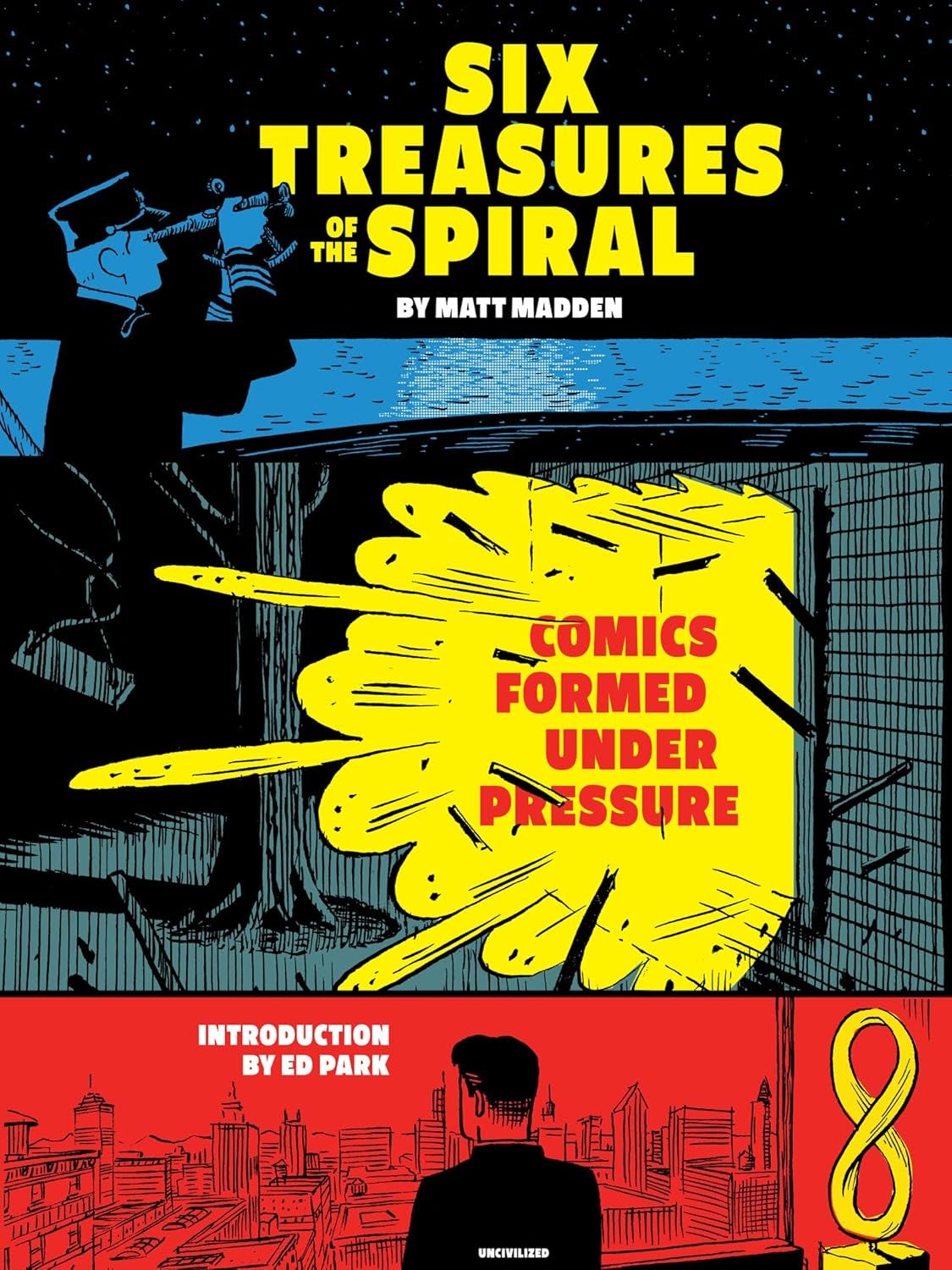
I haven’t read all of it yet but so far the story I like best is Haiku Comics, and I love the fact that every story’s pictorial style is so different from every other one. I intend to review this book more fully, so look out for that. In the meantime I shall bring it to the attention of my students tomorrow. (Did I mention that my Writing Using Constraints course runs tomorrow and that you can enjoy a 15% discount?)
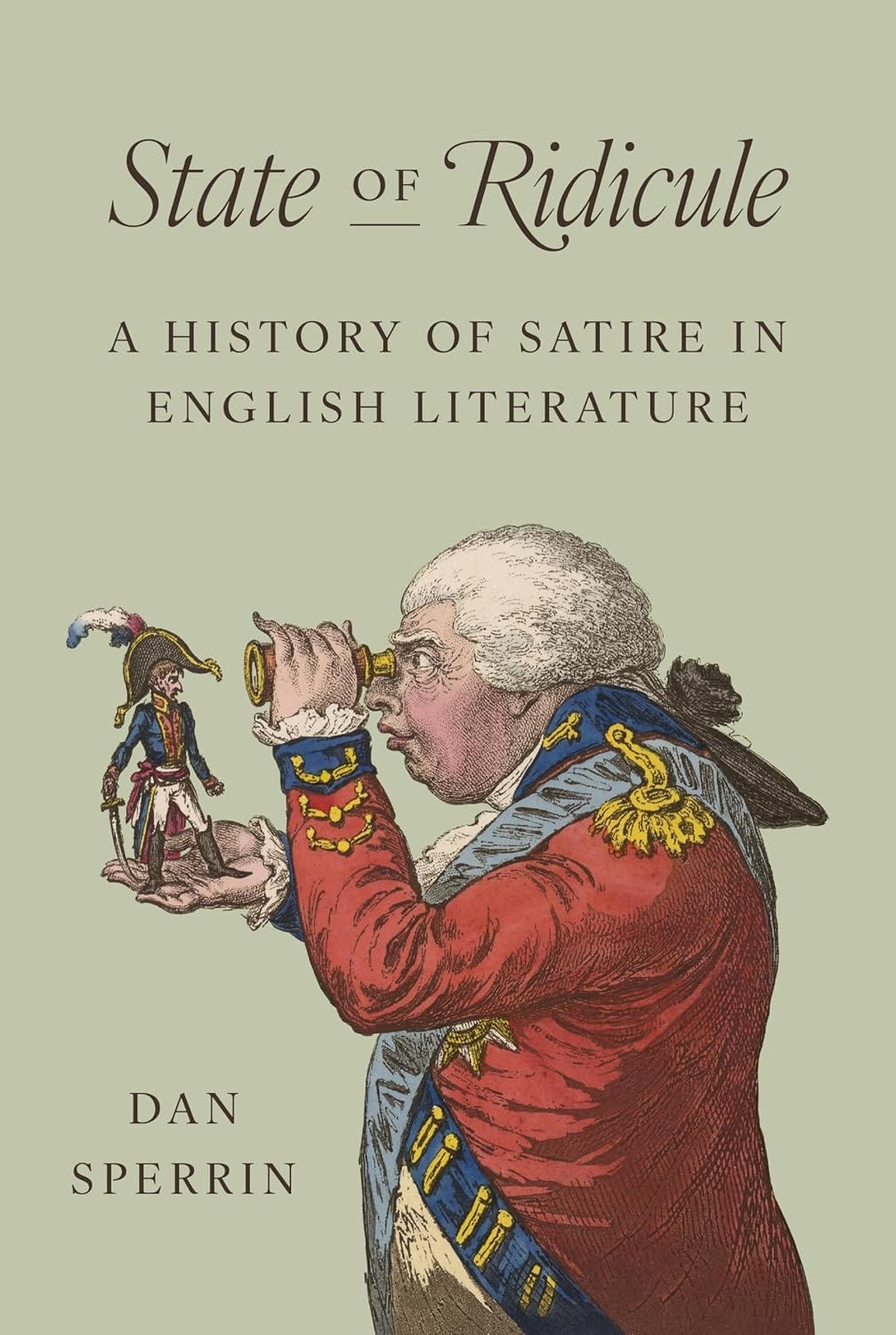
Constraints come in all shapes and sizes, probably the most common of which is the word count. My book reviews for Teach Secondary magazine have to be no more than 150 words long, which is challenging enough at the best of times, but when it comes to a book like State of Ridicule: A History of Satire in English Literature, which is over 700 pages long, the challenge is on a whole new scale! (The link is an Amazon affiliate link by the way.)
On the topic of books, one of the books I bought many years ago, which I never got around to reading, was Germany Without Jews. The link takes you to the book on Abe Books. It’s here somewhere, and I’d like to read it. I just remember one example it cites of the damage the Nazis did. Before they came to power, Germany enjoyed many Nobel Prize winners. After them, the number dwindled to almost none. It strikes me that by getting rid of many of its Jews, one way or another, Germany engaged in a remarkable act of self-sabotage.
And not just in economic, or status terms. I was reading the other day that Germany has a sense of collective guilt over the Holocaust. Indeed, the best education about the Holocaust that schoolkids receive may be found in Germany.
Elaine met a German lady a few years ago. As a girl she idolised her father, and on her 16th birthday her mother told her that her father had been a member of the SS. She was devastated, and has spent the rest of her life — she is now in her 80s — trying to make amends. And it wasn’t even her fault. So there is a kind of second generation trauma for some of the perpetrators’ descendants as well as their victims’ families.
On a lighter note, here are the other three books I am reading at the moment:
A Little History of Mathematics.
The links above are to the brief reviews I wrote recently. Fuller reviews to come in due course.
And now, a few videos for your enjoyment:
Drone warfare: chortles in the House of Commons
You will get a little more out of this video by knowing that the speaker, Ed Davies, is nototious for having performed the most ridiculous stunts, more befittimng a dad on a fun day out than a serious politician. Also, the British government has tried to make life easier for people by subsidising family fun days out.
Death cults
Trigger warning: there’s an expletive at the end.
In the Heat of the Night
Here’s the first nine minutes (approx) of the film In The Heat of the Night. The acting is, in my opinion, stupendous. Rod Steiger and Sidney Poitier are brilliant. It’s a murder mystery, but I think of it as a story of racism and redemption.
I hope you enjoyed this newsletter. Don’t forget: there are still places on my course tomorrow!
That's fascinating about the loss of Nobel Prizes (and the thoughts and work that results in Nobels) since the Jews in Germany were eliminated. Thank you Terry.
"Heat" is still a towering achievement (RIP Rod Steiger, Sidney Poitier and Norman Jewison).